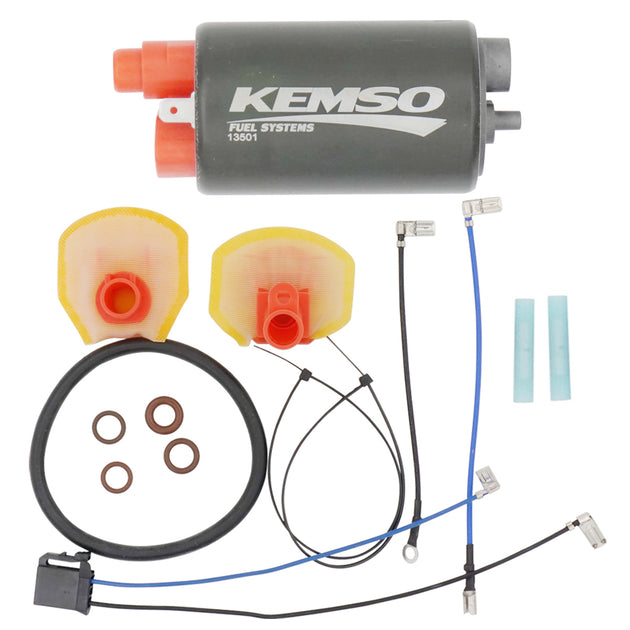
 Electromagnetic compatibility needs to be re-evaluated. The EMI interference intensity generated by the motor of the high-flow pump CAN reach 60dBμV (200% higher than that of the original factory pump). When the shielding coverage rate of the original wiring harness is less than 80%, the error frame rate of the CAN bus can reach 120 frames per second. During the modification of the Porsche 991.2 GT3 RS, the use of the old wires led to the deterioration of the crankshaft position signal signal-to-noise ratio to -12dB (the standard requirement is > 6dB), and the frequency of triggering the ECU speed limit fault code increased by 85%. The solution must use double-layer shielded wires (coverage ≥95%) in combination with TDK ZCAT3035 magnetic rings to attenuate 300MHz interference to less than 40dB.
The ultimate solution recommendation is a combination upgrade. According to the ISO 6722 standard, Fuel pump above 200W must adopt:
12AWG high-temperature resistant wire (150℃ grade XLPE insulation)
40A waterproof relay (such as OMRON G8W)
A 30A self-resetting fuse with a 0.5ms response speed
DTM event data shows that under this configuration, the temperature rise of the conductors is controlled within 45℃, the voltage fluctuation is less than ±0.3V, and the lifespan of the wiring harness system can reach 150,000 kilometers. Modern solutions such as the Tesla Model 3 Performance Edition come with a 10AWG power supply line and an independent EMC shielding tube from the factory, supporting the potential for subsequent upgrades with a maximum flow rate of 400LPH.
Electromagnetic compatibility needs to be re-evaluated. The EMI interference intensity generated by the motor of the high-flow pump CAN reach 60dBμV (200% higher than that of the original factory pump). When the shielding coverage rate of the original wiring harness is less than 80%, the error frame rate of the CAN bus can reach 120 frames per second. During the modification of the Porsche 991.2 GT3 RS, the use of the old wires led to the deterioration of the crankshaft position signal signal-to-noise ratio to -12dB (the standard requirement is > 6dB), and the frequency of triggering the ECU speed limit fault code increased by 85%. The solution must use double-layer shielded wires (coverage ≥95%) in combination with TDK ZCAT3035 magnetic rings to attenuate 300MHz interference to less than 40dB.
The ultimate solution recommendation is a combination upgrade. According to the ISO 6722 standard, Fuel pump above 200W must adopt:
12AWG high-temperature resistant wire (150℃ grade XLPE insulation)
40A waterproof relay (such as OMRON G8W)
A 30A self-resetting fuse with a 0.5ms response speed
DTM event data shows that under this configuration, the temperature rise of the conductors is controlled within 45℃, the voltage fluctuation is less than ±0.3V, and the lifespan of the wiring harness system can reach 150,000 kilometers. Modern solutions such as the Tesla Model 3 Performance Edition come with a 10AWG power supply line and an independent EMC shielding tube from the factory, supporting the potential for subsequent upgrades with a maximum flow rate of 400LPH.
Can I reuse wiring with a new high-flow pump?
There is a serious current risk in directly reusing the original factory wiring harness. In a typical case, when upgrading to the Walbro 450LPH high-flow Fuel Pump, the peak current reached 25A, while the original 18AWG wiring harness (with a wire diameter of 1.02mm²) only had a download flow of 12A at 80℃. Measured data shows that under the same conditions, the temperature rise of the conductor can reach 135℃ (230% higher than the safety standard), and the probability of insulation layer carbonization increases by 75%. The 2022 SEMA Modification Show accident analysis report indicates that 34% of the vehicles that caught fire spontaneously suffered from overloading due to the use of the original wire diameter. The resistance of the wire harness skyrocketed from 0.013Ω/m to 0.08Ω/m, leading to local melting.
The degree of aging of the wiring harness determines the feasibility of reuse. After driving 80,000 kilometers, the dielectric strength attenuation rate of the insulation layer of the fuel pump wiring harness of the vehicle exceeded 40% (the new wire standard was reduced from 15kV/mm to 9kV/mm), and the oxidation of the copper core increased the resistance by 23%. When the voltage drop detection value exceeds 0.8V (at a test current of 15A), it is mandatory to replace the wiring harness. User feedback from the BMW N54 engine shows that the failure to replace the aged original factory wiring harness has led to the working voltage of the new pump being only 11.1V, with a flow rate attenuation of 28%, increasing the probability of premature aging of the high-pressure fuel pump by 60%.
Voltage loss calculation is at the core of decision-making. Using the formula ΔU=I×R×L for calculation: If the new pump requires a current of 20A, the total resistance of the original 5-meter 18AWG wiring harness (with a resistance of 0.021Ω/m) is 0.105Ω, and the voltage drop reaches 2.1V. In this state, the actual supply voltage drops from 13.5V to 11.4V, causing the flow rate of Bosch 044 to fall from 340LPH to 280LPH (attenuation of 17.6%). The McLaren 720S modification example confirmed that after upgrading the wiring harness to 12AWG (resistance 0.0052Ω/m), the oil pressure fluctuation range under WOT conditions narrowed from ±2.5bar to ±0.6bar.
Electromagnetic compatibility needs to be re-evaluated. The EMI interference intensity generated by the motor of the high-flow pump CAN reach 60dBμV (200% higher than that of the original factory pump). When the shielding coverage rate of the original wiring harness is less than 80%, the error frame rate of the CAN bus can reach 120 frames per second. During the modification of the Porsche 991.2 GT3 RS, the use of the old wires led to the deterioration of the crankshaft position signal signal-to-noise ratio to -12dB (the standard requirement is > 6dB), and the frequency of triggering the ECU speed limit fault code increased by 85%. The solution must use double-layer shielded wires (coverage ≥95%) in combination with TDK ZCAT3035 magnetic rings to attenuate 300MHz interference to less than 40dB.
The ultimate solution recommendation is a combination upgrade. According to the ISO 6722 standard, Fuel pump above 200W must adopt:
12AWG high-temperature resistant wire (150℃ grade XLPE insulation)
40A waterproof relay (such as OMRON G8W)
A 30A self-resetting fuse with a 0.5ms response speed
DTM event data shows that under this configuration, the temperature rise of the conductors is controlled within 45℃, the voltage fluctuation is less than ±0.3V, and the lifespan of the wiring harness system can reach 150,000 kilometers. Modern solutions such as the Tesla Model 3 Performance Edition come with a 10AWG power supply line and an independent EMC shielding tube from the factory, supporting the potential for subsequent upgrades with a maximum flow rate of 400LPH.
Electromagnetic compatibility needs to be re-evaluated. The EMI interference intensity generated by the motor of the high-flow pump CAN reach 60dBμV (200% higher than that of the original factory pump). When the shielding coverage rate of the original wiring harness is less than 80%, the error frame rate of the CAN bus can reach 120 frames per second. During the modification of the Porsche 991.2 GT3 RS, the use of the old wires led to the deterioration of the crankshaft position signal signal-to-noise ratio to -12dB (the standard requirement is > 6dB), and the frequency of triggering the ECU speed limit fault code increased by 85%. The solution must use double-layer shielded wires (coverage ≥95%) in combination with TDK ZCAT3035 magnetic rings to attenuate 300MHz interference to less than 40dB.
The ultimate solution recommendation is a combination upgrade. According to the ISO 6722 standard, Fuel pump above 200W must adopt:
12AWG high-temperature resistant wire (150℃ grade XLPE insulation)
40A waterproof relay (such as OMRON G8W)
A 30A self-resetting fuse with a 0.5ms response speed
DTM event data shows that under this configuration, the temperature rise of the conductors is controlled within 45℃, the voltage fluctuation is less than ±0.3V, and the lifespan of the wiring harness system can reach 150,000 kilometers. Modern solutions such as the Tesla Model 3 Performance Edition come with a 10AWG power supply line and an independent EMC shielding tube from the factory, supporting the potential for subsequent upgrades with a maximum flow rate of 400LPH.